
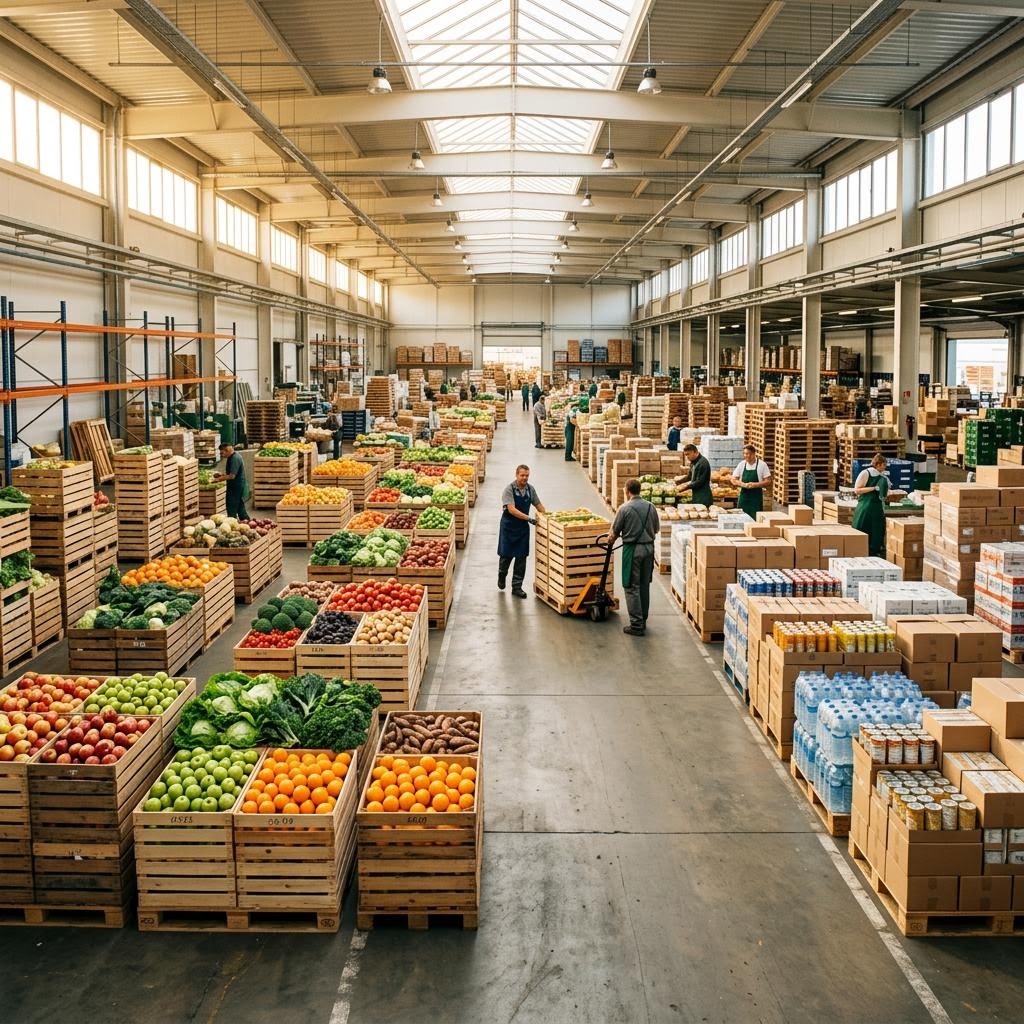
If you are searching for how to find buyers in China for food exports, the challenge is usually not finding names. It is finding importers and distributors that are active, licensed, responsive, and aligned with your product category, pricing, and compliance level. As China’s import demand opens opportunities for overseas suppliers, exporters need a structured buyer-search process instead of broad outreach.
This guide shows how to identify the right buyer types, shortlist credible prospects, prepare an approach that gets replies, and reduce the risk of wasting time on unqualified leads.
Start with the right buyer profile
Before building a lead list, define what kind of buyer you actually need. “Buyer in China” is too broad for most food exporters.
Common buyer types include:
- Importers that handle customs clearance and sell to local distributors
- National or regional distributors focused on retail, foodservice, or specialty stores
- Wholesalers serving wet markets, supermarkets, or independent retailers
- Brand owners looking for private label or contract manufacturing partners
- E-commerce sellers importing packaged food for online channels
- Foodservice suppliers selling to hotels, restaurants, and catering groups
Your target buyer depends on:
- Product type: fresh, frozen, ambient, organic, snack, beverage, ingredient
- Shelf life and cold-chain requirements
- Required certifications and labeling complexity
- Expected order size
- Whether you want one master importer or multiple regional distributors
For example, a frozen seafood exporter needs a buyer with cold-chain capability and port handling experience. A packaged snack exporter may need a distributor with retail placement and local labeling support.
How to find buyers in China for food exports
The best results usually come from combining several channels instead of relying on a single directory or trade show.
1. Build a country-and-category-specific target list
Search by product category first, then by region. A buyer specializing in dairy, fruit, meat, or beverages is usually more useful than a general trading company.
Useful filters for your target list:
- Product category
- Import role: importer, distributor, wholesaler, retailer, brand owner
- Geographic focus: coastal ports, major consumption cities, regional coverage
- Channel focus: retail, foodservice, industrial ingredient supply
- Company size and apparent product portfolio
Tip: On B2Business Hub, you can search verified company profiles by industry and country, which helps narrow food-sector prospects before outreach.
2. Study current import portfolios
A prospect is stronger if it already handles products similar to yours. Look for:
- Existing imported brands or overseas sourcing activity
- Product lines in your category
- Packaging formats similar to your offer
- Distribution strength in your target segment
- Signs of active market development, not just a static website
If a company imports premium packaged foods, your value proposition should focus on quality, origin, and market positioning. If it handles commodity ingredients, price stability and supply reliability may matter more.
3. Use trade events and industry associations selectively
Food trade events can be useful, but only if you arrive with a list of target companies and meeting requests. Do not treat events as random lead collection.
Before any event:
- Identify exhibitors and attendees in your category
- Request meetings in advance
- Prepare a one-page product summary
- Bring compliance documents and export packaging details
Industry associations, chambers of commerce, and export promotion bodies can also help identify serious importers by category.
4. Ask logistics and packaging partners what they see
Freight forwarders, cold-chain providers, packaging suppliers, and inspection firms often know which importers are active in certain food categories. They may not formally “introduce buyers,” but they can help you understand:
- Which ports matter for your product
- Which regions are growing for your category
- Whether buyers prefer full-container or mixed loads
- Common documentation or inspection bottlenecks
This matters in a market where freight conditions and capacity shifts can change landing costs and delivery reliability.
Qualify buyers before you pitch
Many exporters lose months speaking to the wrong contacts. Qualification should happen early.
Check these points:
- Does the company clearly operate in food imports or distribution?
- Is it active in your exact category?
- Can you identify a decision-maker in purchasing, sourcing, or import management?
- Does it have a realistic route to market for your product?
- Can it manage the compliance and import process required for your product type?
- Is the expected volume compatible with your production capacity?
Red flags include:
- Very vague company description
- No visible product specialization
- Generic email-only contact with no named buyer
- Requests for pricing before discussing product fit or compliance
- Interest in too many unrelated categories at once
- Pressure for exclusivity at first contact
Prepare a buyer-ready export package
Chinese buyers often ignore vague introductions. Your first message should make it easy to judge fit quickly.
Prepare these materials:
- Short company introduction
- Product list with specifications
- Shelf life, storage, and packaging format
- Production capacity and standard lead times
- Existing export markets, if relevant
- Certifications and testing documents you can share
- High-quality product and packaging photos
- Minimum order quantity and preferred trade terms
Also prepare answers to practical questions such as:
- Can labels be adapted for the market?
- Can packaging sizes be changed?
- What is your production flexibility during peak season?
- Can you support private label?
- What documents will ship with each order?
Write outreach that gets responses
A good first message is short, specific, and commercial. Do not send a long company history.
A strong outreach email should include:
- Who you are
- What exact food product you export
- Why you believe the buyer is a fit
- The product’s market position or use case
- Key commercial facts: MOQ, format, certifications, origin
- A clear next step
Example structure:
- Subject: Frozen berry supplier for retail and foodservice
- Intro: We export IQF berries from [country] to distributors and food manufacturers.
- Fit: We noticed your portfolio includes imported frozen fruit and dessert ingredients.
- Offer: We supply retail packs and bulk formats with stable seasonal capacity.
- Next step: If relevant, we can share specs, packaging options, and sample availability.
Avoid these mistakes:
- Sending a catalog with no explanation
- Using a generic “Dear Sir/Madam” if a real contact is available
- Leading with low price only
- Asking for a call before establishing relevance
- Writing in a way that ignores import compliance questions
Be clear on compliance before discussing scale
Food exports fail late when compliance is treated as a detail instead of a sales requirement. Even if the buyer manages import registration and local procedures, you still need to understand what your side must provide.
Confirm early:
- Product ingredients and formulation details
- Label data and translation requirements
- Health, sanitary, phytosanitary, or origin documents as applicable
- Packaging material compliance where relevant
- Testing, inspection, or residue documentation if required for your category
- Batch traceability and recall readiness
If your documentation is incomplete or inconsistent, serious buyers may stop the conversation quickly.
Negotiate samples, trials, and first orders carefully
The first transaction is usually a test of reliability, not just product quality.
For first orders, align on:
- Sample policy and cost responsibility
- Commercial specifications and approved product version
- Packaging and labeling approval process
- Incoterms and port of destination
- Payment terms
- Inspection requirements
- Claim process for quality issues
- Reorder timeline if the trial succeeds
Be careful with requests that create hidden cost:
- Repeated free sample demands
- Custom packaging before basic commercial commitment
- Large documentation burdens for a tiny trial order
- Price demands that ignore freight, cold chain, or shelf-life realities
Protect margin when freight conditions change
Food exporters into China can be exposed to freight volatility, blank sailings, cold-chain bottlenecks, and shifting inland delivery costs. Do not quote as if logistics are fixed.
Build protection into your process:
- Set a quote validity period
- Separate product price from major logistics assumptions where appropriate
- Confirm temperature-control responsibilities clearly
- Define who bears extra inspection, storage, or demurrage costs if delays occur
- Use realistic lead times rather than optimistic ones
This reduces disputes when market conditions change between quotation and shipment.
Create a simple buyer scoring system
If you are contacting many companies, rank them to focus your effort.
A practical scorecard can include:
- Category fit
- Import experience
- Channel strength
- Responsiveness
- Documentation readiness on their side
- Volume potential
- Payment risk
- Strategic value for market entry
A smaller specialist distributor with strong category fit can be a better first partner than a large but unfocused trading company.
Tip: If you need a starting list, B2Business Hub offers verified company profiles with sales contacts and a free trial with 3 searches, which can help you test categories and country targeting before scaling outreach.
Final takeaway
Finding buyers in China for food exports is less about mass prospecting and more about disciplined matching. Define the right buyer type, verify category fit, prepare compliance-ready materials, and approach each prospect with a clear commercial reason to respond.
Exporters that succeed usually do three things well: they target narrowly, qualify early, and treat documentation and logistics as part of the sales process, not as problems to solve later.
Ready to find verified B2B partners? Start your free trial.